
Spring is peak season for bees – and for accidental drownings in backyard water features. Here’s what’s actually happening, and how to help.
Why Bees Need Water
Your birdbath or backyard fountain? It’s probably already on their radar.
Bees use water to cool the hive on hot days, dilute thick honey to feed their larvae, and stay hydrated during long foraging flights. A single honey bee colony can go through a liter of water or more on a warm summer day – which means scout bees are constantly searching for reliable sources near the hive.
Your birdbath or backyard fountain? It’s probably already on their radar.
Why Birdbaths, Pools, Fountains, and Buckets Can Be Dangerous
The problem isn’t that bees are careless. It’s that most backyard water features weren’t designed with bees in mind.
Birdbaths have smooth, sloped walls and no grip at the waterline. Fountains have current. Pools have chemical-treated water and steep edges with nothing to hold onto. Even a simple bucket left out in the yard can become a trap after a rain.
When a bee lands at the edge to drink and slips in, it typically can’t get back out. The sides are too smooth, the water too deep, and the bee too small. It exhausts itself trying to escape – and most of the time, it doesn’t make it.
It’s not rare. It happens in backyards every single day, quietly, without anyone noticing.
Common DIY Fixes: Rocks, Corks, Sticks, Marbles
A lot of gardeners have figured out workarounds, and some of them work pretty well.
Rocks and pebbles placed near the rim of a birdbath give bees something to land on and a rough surface to grip. Partially submerged stones that sit just above the waterline are especially helpful.
Wine corks floating on the surface are a popular trick. They’re buoyant, easy to source, and bees will actually use them as tiny rafts to drink from.
Sticks or twigs laid across the edge of a bucket or trough give bees a bridge to reach the water and, more importantly, a way to climb back out if they fall in.
Marbles or glass beads in a shallow dish work well for a dedicated bee watering station – fill the dish just enough so water comes up between the beads, giving bees a stable surface to land on while they drink.
These are all legitimate solutions. If you have the materials on hand, they’re worth doing. The downside is that they can look a little makeshift, drift around, or need constant adjusting. Which brings us to the cleaner option.
Why a Floating Bee Raft Is Cleaner and Easier
A floating bee platform takes the same idea as the DIY fixes – give bees a stable surface right at the water’s edge – and turns it into something purpose-built.
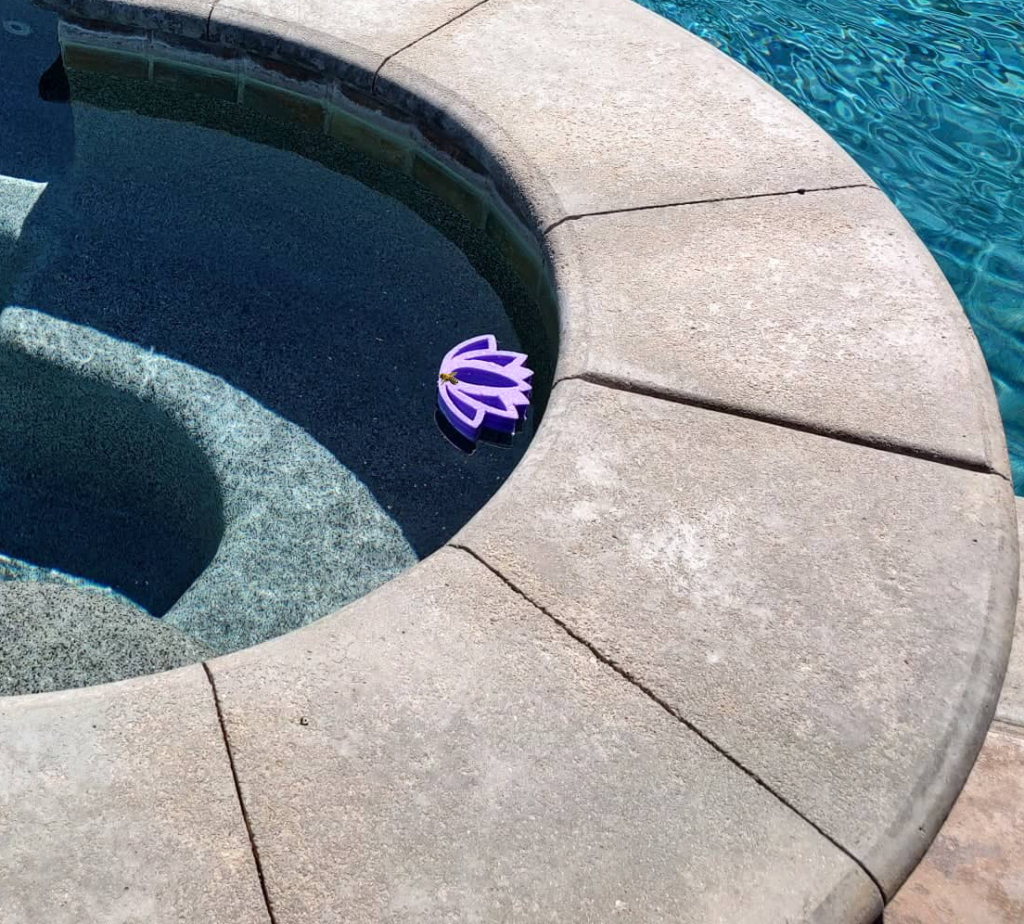
The Lotus Flower Bee Raft gives bees a decorative floating landing spot so they can drink safely without slipping into the water. It floats freely on the surface, moves gently with the water, and works in birdbaths, fountains, ponds, and pools. No anchoring, no assembly, no tools. You just place it in the water.
It’s also UV-resistant, wildlife-safe, and won’t affect your water quality – so fish, frogs, and birds are all fine around it. The lotus flower design actually looks like it belongs in a garden, which is more than you can say for a handful of wine corks.
For a standard birdbath, one is usually enough. For larger water features, a couple spread across the surface gives bees more coverage and more options.
Where to Place a Bee Raft
Placement matters more than most people realize.
The ideal spot is near flowering plants or a pollinator garden – somewhere bees are already foraging. If they’re visiting your lavender or coneflowers, a water source nearby means they don’t have to travel far.
Partial shade is better than full sun. Water in direct sunlight heats up fast, evaporates quickly, and can become uncomfortable for bees to approach in peak afternoon heat. A spot that gets morning sun and afternoon shade stays cooler and stays fuller longer.
Avoid placing water features in high-foot-traffic areas. Bees aren’t aggressive when they’re drinking, but putting a watering station right next to a patio or walkway creates unnecessary proximity. A corner of the yard, near a garden bed, or along a fence line is ideal.
Best Time of Year to Set One Out
Spring is the most important time to have a safe water source ready.
As temperatures warm up and colonies become active again, scout bees go out looking for water sources to share with the hive. If they find yours early – and it’s reliable and safe – they’ll keep coming back all season. Once a water source gets on a colony’s map, it tends to stay there.
That said, bees need water year-round in warmer climates. In most of the US, the window runs from early spring through late fall. Setting out a Bee Raft in March or April means you’re ready before the rush hits.
Add One to Your Backyard This Spring
Helping pollinators doesn’t have to mean a full garden overhaul or a beekeeping setup. Sometimes it’s just water.
A few rocks, a cork, or a floating platform can mean the difference between a bee that makes it home and one that doesn’t. Given how much bees do for our gardens, our food supply, and our ecosystems, it’s a small thing worth doing.
Add one to your birdbath, fountain, pond, pool, or backyard water feature and turn ordinary water into a safer stop for pollinators.