Bees are often described as tiny workers. They fly from flower to flower, collect nectar, pollinate plants, and return to the hive. To most people, they seem like simple insects following instinct.
But new research suggests bees may be more complex than many of us realize. Do bees have feelings?
According to a recent report from The Guardian, scientists studying bumblebees found behavior that looked similar to “liking” and “disliking” responses. When bees tasted sweet solutions, they continued extending their tongues afterward. When they tasted unpleasant solutions, such as salty or bitter liquids, they showed signs of distaste by shaking their heads or wiping their mouths.
The study does not mean bees think or feel exactly like humans. But it does add to a growing conversation about insect behavior, awareness, and the possibility that bees experience the world in ways we are only beginning to understand.
What the Study Found
Researchers presented bumblebees with different liquid solutions, including sugar water, plain water, salt, and bitter-tasting quinine.
The bees responded differently depending on what they tasted.
After tasting sweet solutions, the bees extended their glossa, which is the insect tongue. This behavior looked similar to a positive response after tasting something pleasant.
After tasting salt or bitter solutions, the bees showed behavior that looked more negative. They shook their heads and wiped their mouthparts.
Scientists compared these responses to “liking” and “disliking” behaviors seen in mammals.
That does not prove bees have emotions the way people do. But it does suggest their responses may be more than simple mechanical reflexes.
Why “Do Bees Have Feelings?” Matters
For years, many people thought of insects as tiny robots. Bees were often viewed only through the lens of what they do for us: pollinating crops, producing honey, supporting gardens, and helping ecosystems function.
But research like this encourages a different question.
What if bees are not just useful?
What if they are also experiencing their environment in meaningful ways?
That idea matters because the way we think about bees affects the way we treat them.
If bees can respond to the world with preferences, discomfort, attraction, or avoidance, then protecting them becomes more than just an environmental issue. It becomes a responsibility.
Bees Make Choices Every Day
Anyone who watches bees closely can see that they are constantly making decisions.
They choose which flowers to visit. They return to reliable food sources. They remember locations. They communicate with other bees. They search for water when the weather is hot. They avoid danger when they can.
A bee visiting a backyard birdbath, fountain, pond, bucket, or garden water feature is not just randomly landing somewhere. It is looking for something it needs.
Water is part of that daily search.
Why Bees Need Water
Bees need water to drink, cool the hive, and support colony health during warm weather.
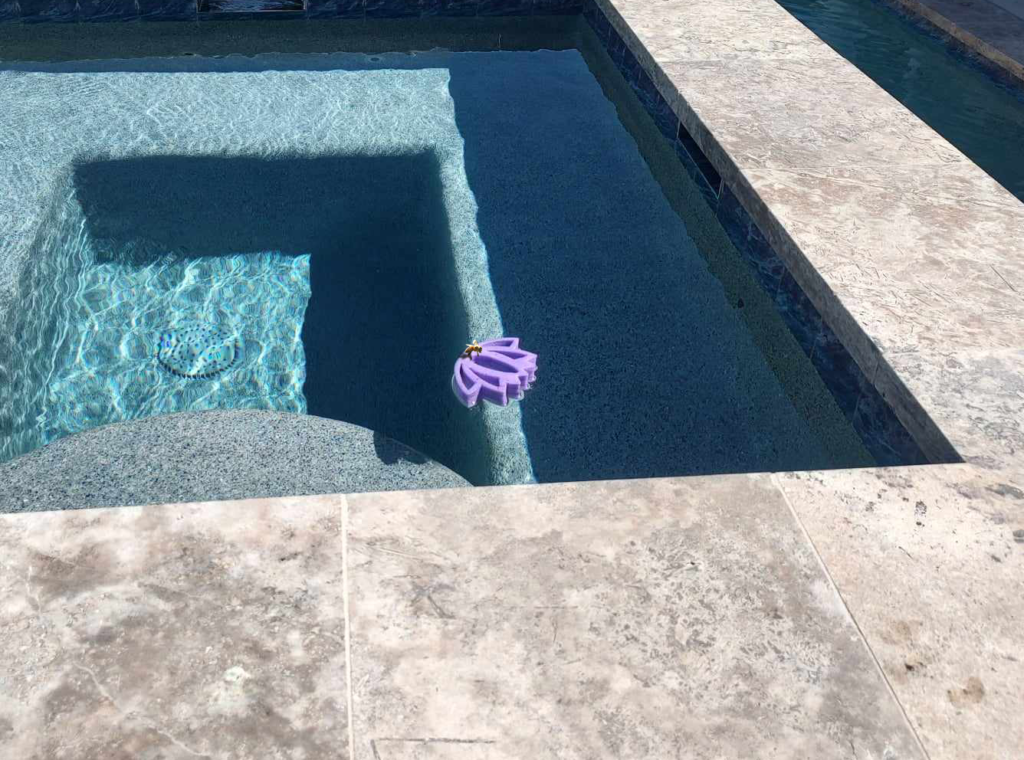
During hot days, bees may repeatedly visit the same water source. That could be a birdbath, fountain, pond, bucket, barrel, hot tub, jacuzzi, or backyard water bowl.
The problem is that many backyard water sources are not designed with bees in mind.
Smooth edges, deep water, moving water, and slippery surfaces can make it difficult for bees to land safely. If a bee falls into open water and its wings get wet, it may not be able to escape.
Safe Water Starts With a Place to Land
A bee does not need much from us.
It needs flowers. It needs a safer environment. And when it comes to water, it needs a place to land.
That is why a floating landing platform can help.
The Lotus Flower Bee Raft is designed to float on outdoor water sources and give bees and small pollinators a place to land, rest, and drink. It is a simple backyard tool for people who already have birdbaths, fountains, ponds, buckets, barrels, hot tubs, jacuzzis, or garden water features.
The current small Bee Raft is not intended for swimming pools.
A Small Backyard Choice With a Bigger Meaning
If bees are more aware of their world than we once believed, then small choices matter even more.
A flower matters.
A pesticide-free space matters.
A clean water source matters.
A safe place to land matters.
We may not fully understand what a bee experiences, but we can still make our yards, gardens, and water features safer for them.
The next time you see a bee visiting your backyard water source, it may be doing more than simply following instinct. It may be making a choice.
Let’s make that choice a little safer.