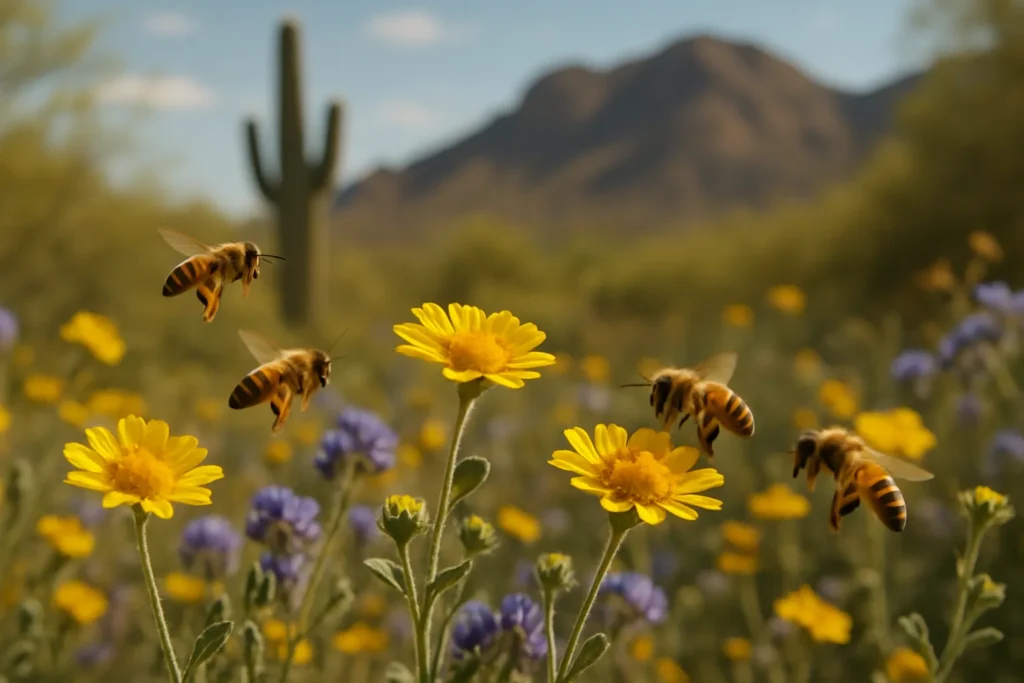
When most people think about the workers responsible for producing Arizona’s food, they probably picture farmers tending crops, operating equipment or harvesting fruits and vegetables.
But some of Arizona’s hardest-working farmhands are only a fraction of an inch long.
Understanding how bees help Arizona farms begins with pollination, but their importance also extends to honey production, healthy ecosystems and stronger local food systems.
At Agritopia Farm in Gilbert, bees play a major role in pollinating crops, supporting successful harvests and producing local honey influenced by the plants growing throughout the surrounding desert landscape. Their work offers a powerful example of how bees help Arizona farms remain productive—even under challenging desert conditions.
How Bees Help Arizona Farms Produce More Food
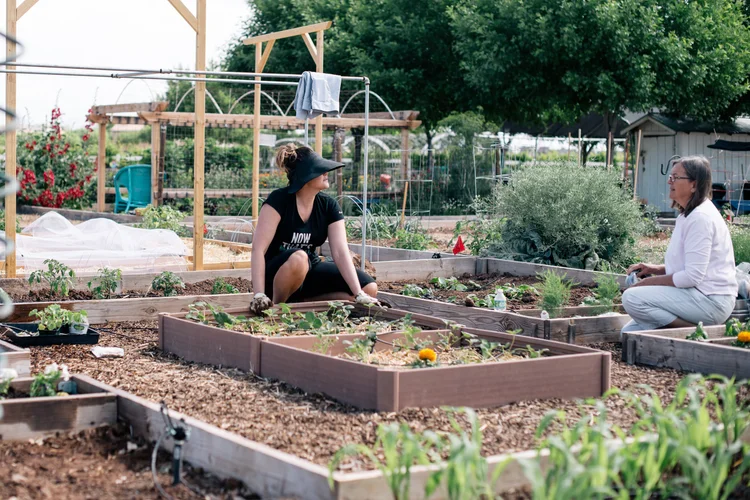
Agritopia is an 11.5-acre certified organic farm that grows more than 45 varieties of fruits and vegetables throughout the year.
Agritopia offers a practical example of how bees help Arizona farms by moving pollen between fruit trees, vegetables and flowering plants throughout the property.
Unlike orchards that bring managed honey bee colonies onto the property only during a particular blooming season, Agritopia keeps approximately 20 to 30 hives in its orchard year-round. The bees pollinate fruit trees as well as crops growing across the farm.
That means the value of the bees extends far beyond the honey they produce.
Christy Davis of the Arizona Urban Agriculture Foundation explained to AZFamily that the bees help create the abundance seen throughout the farm. By transferring pollen between flowers, bees support the production of fruits, vegetables and seeds.
According to the USDA, approximately three-fourths of the world’s flowering plants and about 35 percent of food crops depend on animal pollinators to reproduce. More than 3,500 species of native bees also contribute to crop yields across the United States.
A successful farm is built from the soil up, but pollinators are often the quiet workforce holding the entire system together.
Why Arizona Honey Can Taste Different Every Season
Honey is not a factory product with one standard color or flavor. It reflects the flowers and landscape where it was produced.
At Agritopia, honey harvested from the same bees and the same hives can look noticeably different depending on the time of year. One harvest may be light and golden, while another may be darker and more amber-colored.
During warmer seasons, the bees may collect nectar and pollen from citrus blossoms, clover and other plants that flower during spring and summer. Winter honey may contain more pollen from native desert plants.
Those changing floral sources affect the honey’s color, aroma and flavor. The result is a local product that carries something mass-produced honey cannot easily duplicate: the character of a particular season and place.
That is part of what makes regional honey so interesting. Each jar can serve as a small record of what was blooming when the bees were foraging.
Honey may be the sweet reward people notice, but pollination remains the larger agricultural contribution.
Arizona’s Food Story Begins With Bees
Restaurants and chefs often receive most of the attention when people discuss local food. However, the real story begins long before a meal reaches a plate.
It begins with healthy soil, flowering plants, growers—and pollinators.
Agritopia distributes produce through a cooperative that helps make locally grown food available to restaurants around Arizona. The farm demonstrates how agriculture can continue operating inside a rapidly developing urban area rather than automatically giving way to additional construction.
Bees connect every stage of that process.
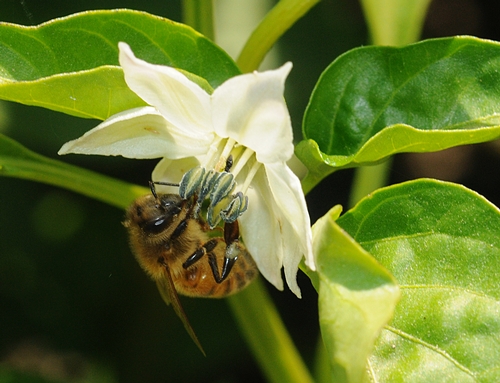
They move between blossoms, transfer pollen and help plants produce the food that eventually reaches farm stands, kitchens and dining tables.
The USDA reports that more than 100 crops grown in the United States rely on honey bees and other pollinators. Their work supports not only farms but also food systems, local economies and healthy ecosystems.
Desert Bees Need More Than Flowers
Flowering plants provide bees with nectar and pollen, but bees also require dependable access to water.
This becomes especially important during Arizona’s hottest months.
Honey bees use water inside the colony to help regulate hive temperature. Worker bees collect water, place droplets throughout the hive and fan their wings. As the water evaporates, it helps cool the colony and protect the developing brood.
Water is also used to prepare food for developing bees and support other basic biological functions within the colony.
When temperatures climb, bees may search for water in:
- Birdbaths
- Garden fountains
- Ponds
- Irrigation runoff
- Buckets
- Pet dishes
- Leaking faucets or hoses
Bees are resourceful, but the water sources they find are not always easy to use safely.
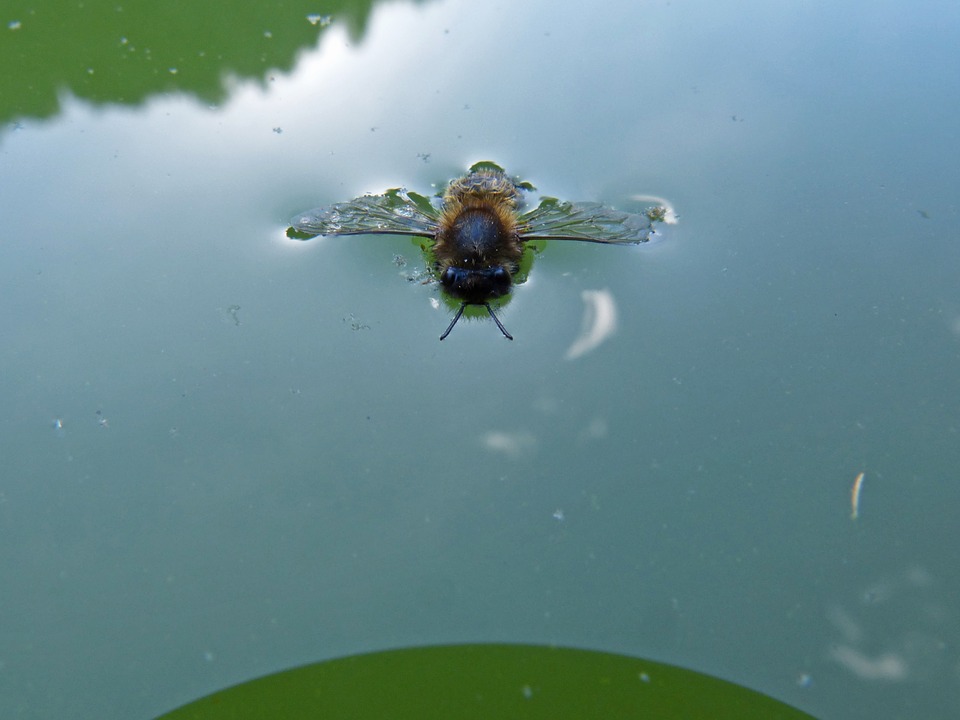
Deep water, steep edges and slippery surfaces may leave a bee without a stable place to land. A bee that falls into the water can become exhausted while attempting to climb back out.
Creating a More Pollinator-Friendly Yard
Supporting bees does not require owning a farm or maintaining a beehive.
A backyard, patio, garden or community space can provide valuable resources when it includes flowering plants and dependable water.
Homeowners can help by:
- Growing a variety of flowers that bloom during different seasons.
- Choosing native or regionally appropriate plants whenever possible.
- Avoiding unnecessary chemical use around flowering plants.
- Keeping outdoor water sources clean.
- Providing stable landing areas where insects can reach the water without becoming trapped.
The USDA notes that pollinator habitat can be created almost anywhere, including residential yards, school gardens, roadsides and small containers placed on windowsills.
Small spaces still matter.
A Safer Place to Land
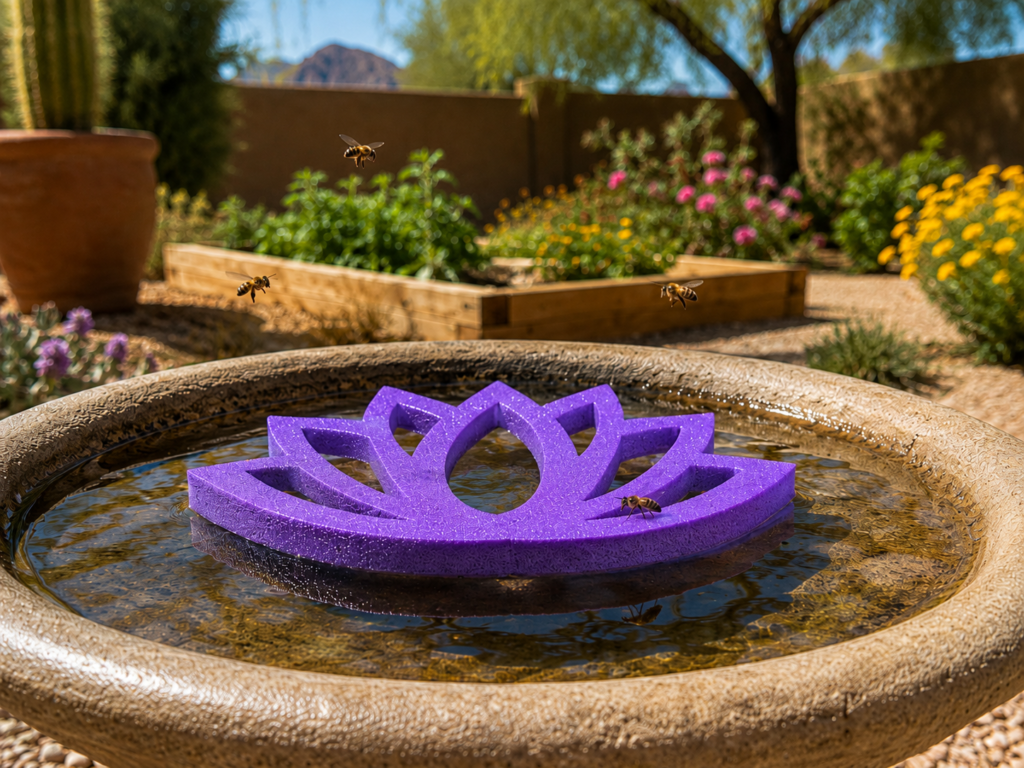
The Bee Raft was created to give bees and other beneficial insects a floating place to land when visiting common outdoor water features.
Placed in a birdbath, fountain, pond, bucket, barrel or similar water source, the lightweight floating platform rests on the surface and moves with the water level. Its textured shape gives visiting insects a place to pause, rest and approach the water from the edge.
It does not replace flowers, natural habitat or responsible gardening. It simply adds another useful resource to a pollinator-friendly space.
The lesson from farms like Agritopia is straightforward: when bees have access to the resources they need, the benefits extend far beyond the hive.
Healthier pollinators support stronger gardens, more productive farms, distinctive local honey and the foods we enjoy every day.
In the Arizona desert, flowers provide the fuel—but water helps keep the workforce flying.
The story of Agritopia shows how bees help Arizona farms, home gardens and local communities thrive under difficult desert conditions.
Help give visiting pollinators a place to land. Explore The Bee Raft and add a floating resting platform to your birdbath, fountain or backyard water feature.
Do not leave children or pets unattended near outdoor water features.